Brain development is front-loaded. In the first years of life the brain forms new synaptic connections at a rate it will never match again, then spends the following decade refining and insulating them. Every one of those steps draws on nutrients supplied by what a child eats, which makes early diet one of the few inputs a parent can directly influence.
The nutrients that do the building
A handful of nutrients carry an outsized share of the structural work. They are worth knowing by name, because they are also the ones typical diets tend to under-deliver.
Choline
Choline builds cell membranes and produces acetylcholine, the neurotransmitter most associated with memory and attention. It is concentrated in egg yolks and organ meats, foods many children refuse, and national surveys find the large majority of kids consume below the recommended intake. It is the clearest example of a structural brain nutrient hiding in plain sight.
DHA and structural fats
Roughly 60% of the brain is fat, and a significant share of that is the omega-3 fatty acid DHA, which concentrates in neural membranes and the retina. Diets low in fatty fish tend to run low on it.
Iron, zinc, and the B-vitamins
Iron supports the oxygen supply and myelination of a fast-growing brain. Zinc participates in neuronal signaling and growth. The B-vitamins, especially folate and B12 in their active forms, drive the methylation reactions behind DNA regulation and neurotransmitter production. These run hardest during periods of rapid growth.
Why "just feed them well" is harder than it sounds
Food first is the right instinct, and for some families it is enough. The difficulty is that the foods richest in these specific nutrients, egg yolks, liver, oily fish, and leafy greens, sit squarely on the list of things young children most often reject. A daily supplement is a way to close a predictable gap, not a replacement for a varied diet.
How Melons is built around this
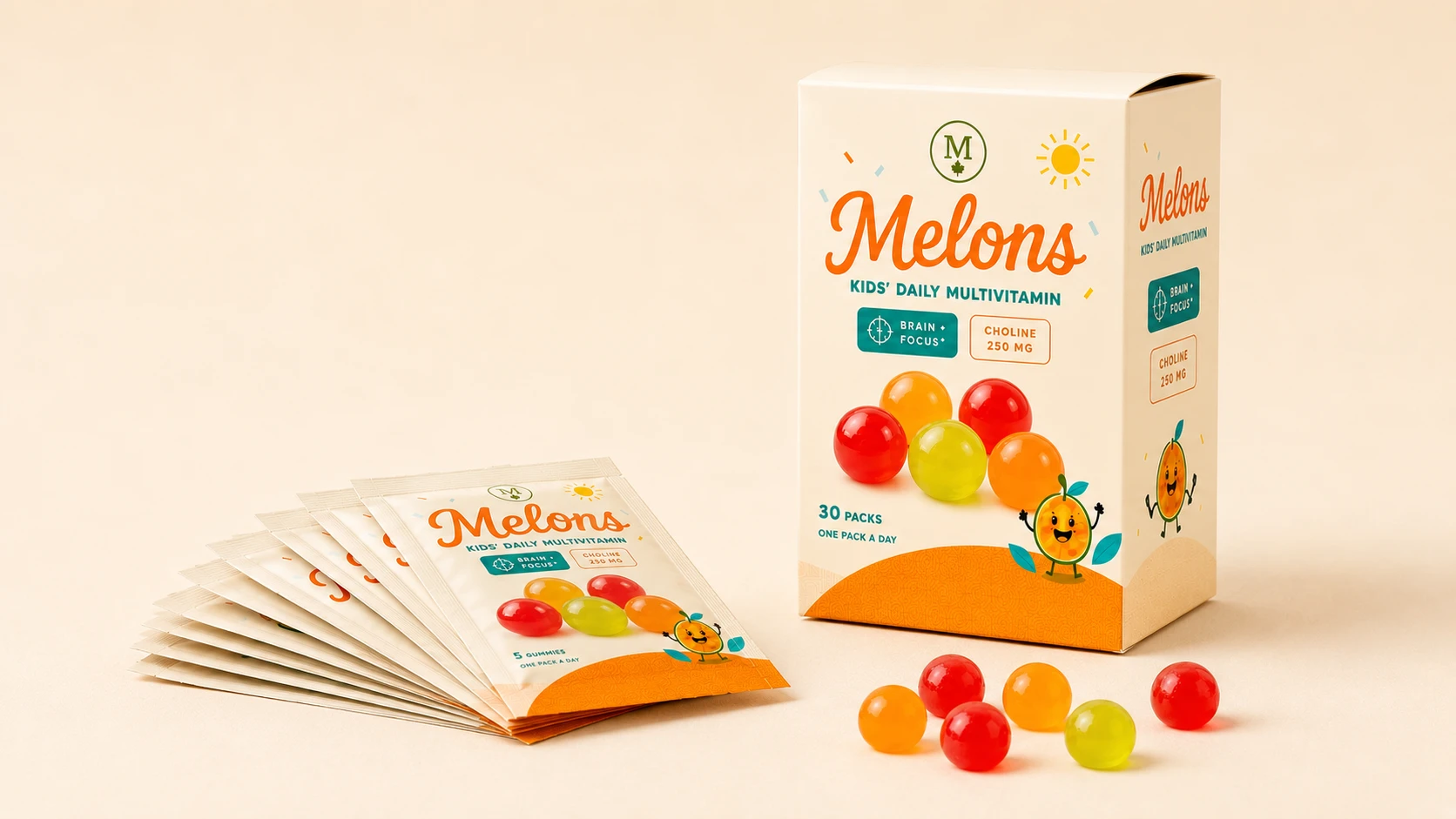
Melons is dosed to fill the gaps the science points to: a real 250 mg of choline, active-form folate and B12, vitamin D, a chelated zinc, plus fiber and a shelf-stable probiotic for the gut. Spreading the daily serving across five small gummies is what makes room for the choline a single pill cannot carry. The full panel and the exact form of every nutrient are published in the ingredients glossary.
This page is for general education and is not medical advice. Dietary supplements are not intended to diagnose, treat, cure, or prevent any disease. Talk to your pediatrician about your child's individual needs.